Why grasscloth needs an experienced installer
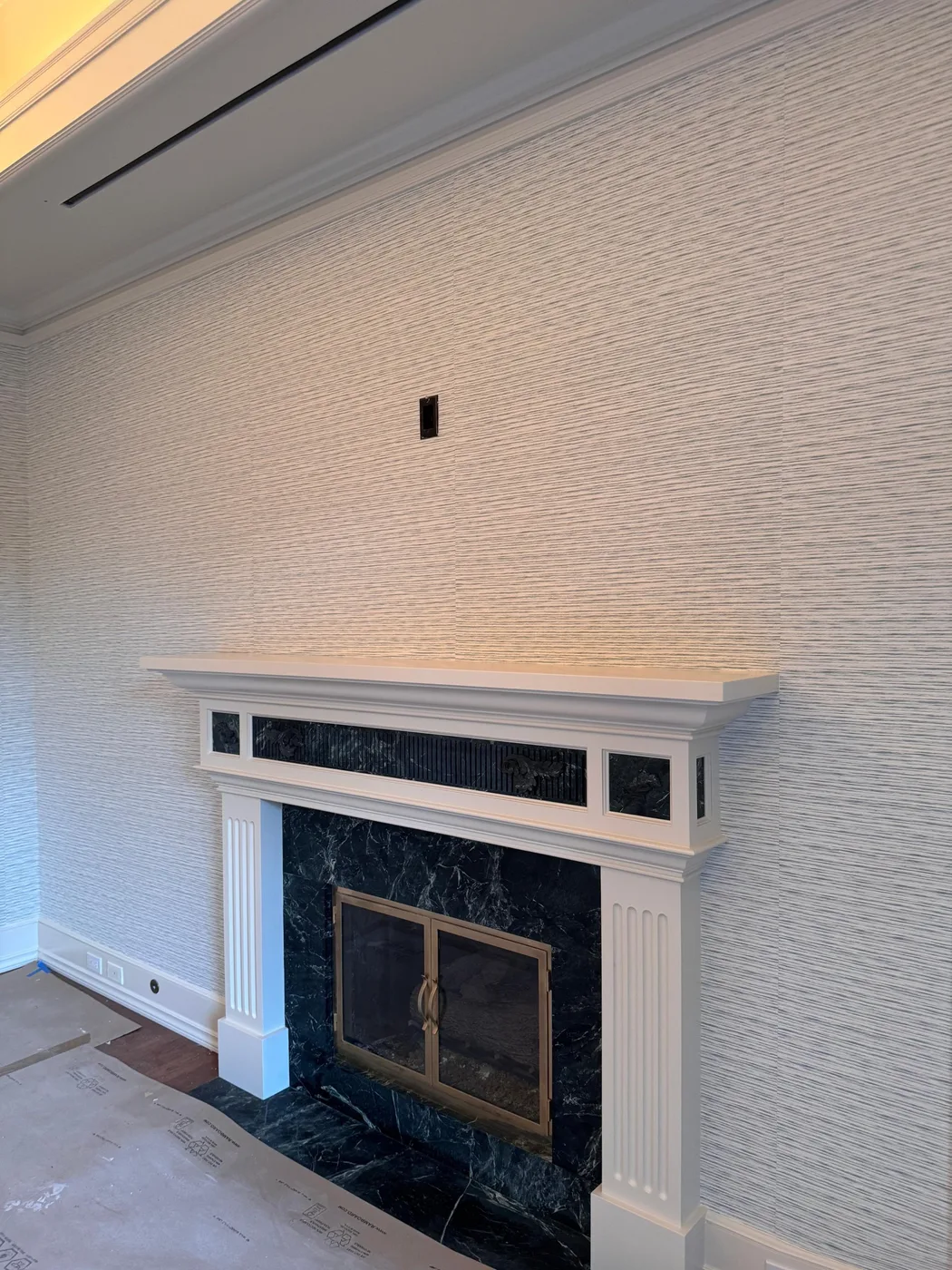
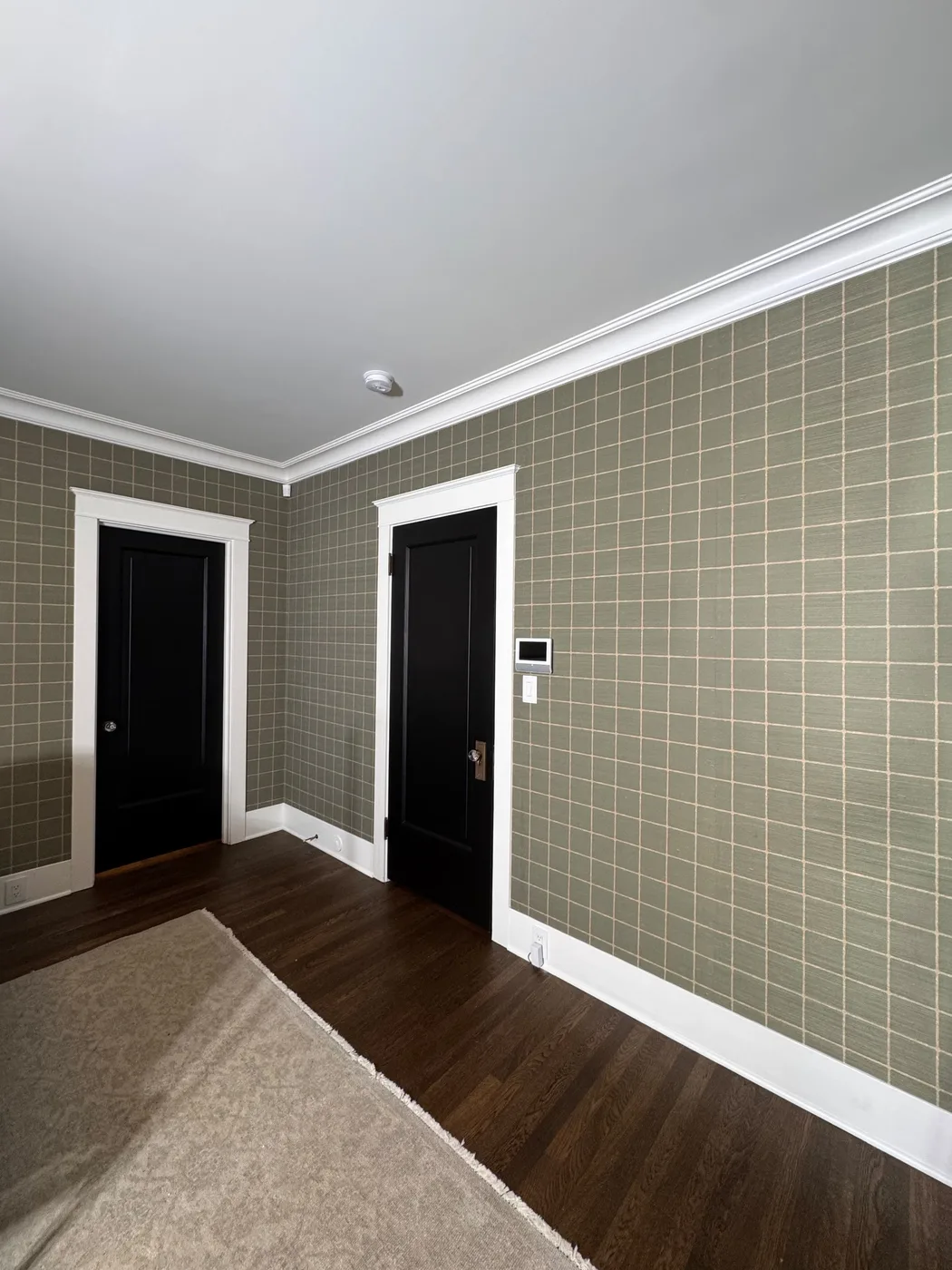
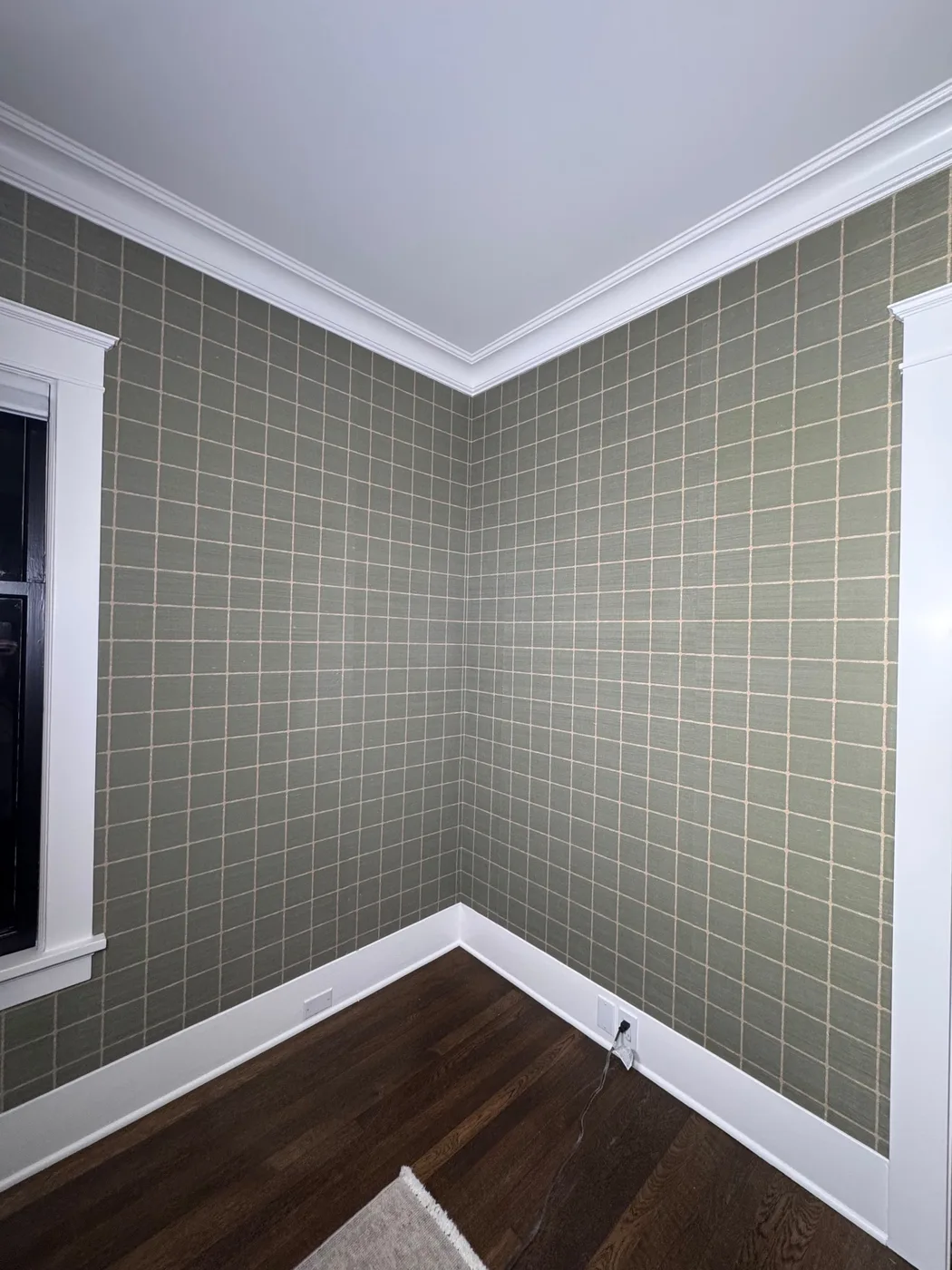
Grasscloth is woven from natural fibers and laminated onto a paper backing. That gives it a texture and warmth no printed paper can match — and it also means it behaves differently from ordinary wallpaper. Every roll varies in tone, seams are always visible to some degree, the face stains if paste touches it, and the fibers can't be scrubbed. One mistake and the strip is ruined, and these papers are not cheap. That's why designers and homeowners in Seattle and on the Eastside call a specialist.
Materials we install
- Natural grasscloth, sisal, jute, hemp, raffia and seagrass
- Arrowroot and paperweave
- Printed grasscloth (like the fish-print powder room in our gallery)
- Silk, linen and other fabric-backed wallcoverings
- Cork, mica and metallic-leaf specialty papers
How we install grasscloth
- Check the rolls first. We confirm every roll is from the same lot, look for flaws, and unroll them side by side to see the color variation before a single cut is made.
- Sequence the panels. Strips are numbered in order straight off the roll so tone shifts gradually across the wall. We often reverse-hang alternate strips when the manufacturer recommends it, to minimize shading at the seams.
- Prep for a non-forgiving material. The wall gets a pigmented wallcovering primer in a tone close to the paper, so tiny gaps at seams don't flash white.
- Paste the paper, not the face. We use the adhesive the manufacturer specifies, applied evenly to the backing and booked for the right time, keeping paste completely off the fibers.
- Butt seams and trim clean. Seams are butted tight and pressed with soft tools — never rolled hard or wiped wet — and edges are trimmed with fresh blades so the fibers don't fray.
What to expect from grasscloth
Because it is a natural product, visible seams and some color variation between strips are normal — manufacturers say so on the label. Our job is to make those seams as tight and even as possible and to arrange the variation so it reads as character, not as a mistake. In humid rooms like full bathrooms we may suggest a vinyl “faux grasscloth” instead; we'll talk through the trade-offs during your estimate.
Where grasscloth works best
- Dining rooms, living rooms and libraries
- Primary bedrooms and headboard walls
- Home offices, entries and powder rooms with good ventilation
- Hotel corridors, offices and restaurants (often in a commercial-grade version)
Frequently asked questions
Will I see the seams on grasscloth?
Yes, a little — that is the nature of the material and every manufacturer notes it. Careful sequencing, a tone-matched primer and tight butt seams make them as subtle as possible.
Can grasscloth go in a bathroom?
In a powder room with no shower, usually yes. In a full bathroom with steam, natural grasscloth can stain, warp or grow mildew; a vinyl grasscloth look-alike is the safer choice.
How do I clean grasscloth?
Dust gently with a soft brush or vacuum attachment. Avoid water — it can leave marks on natural fibers. Blot spills right away with a dry cloth.
How much extra grasscloth should I order?
Order at least one extra roll beyond the measured count. Because color varies between lots, reordering later rarely matches.
Grasscloth Wallpaper Installation near you
We come to you for a free on-site estimate anywhere in our service area: