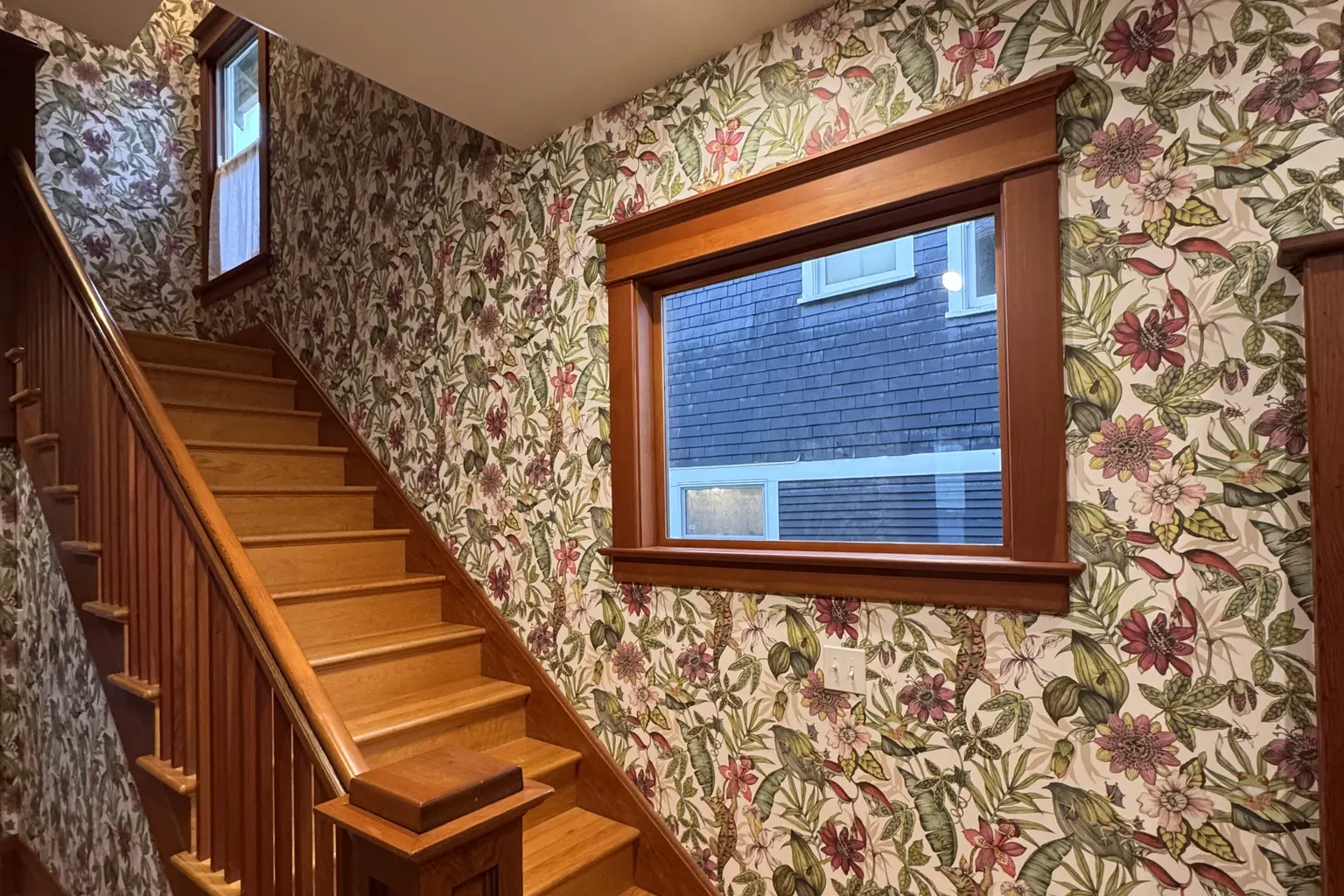
Removal is more than pulling paper
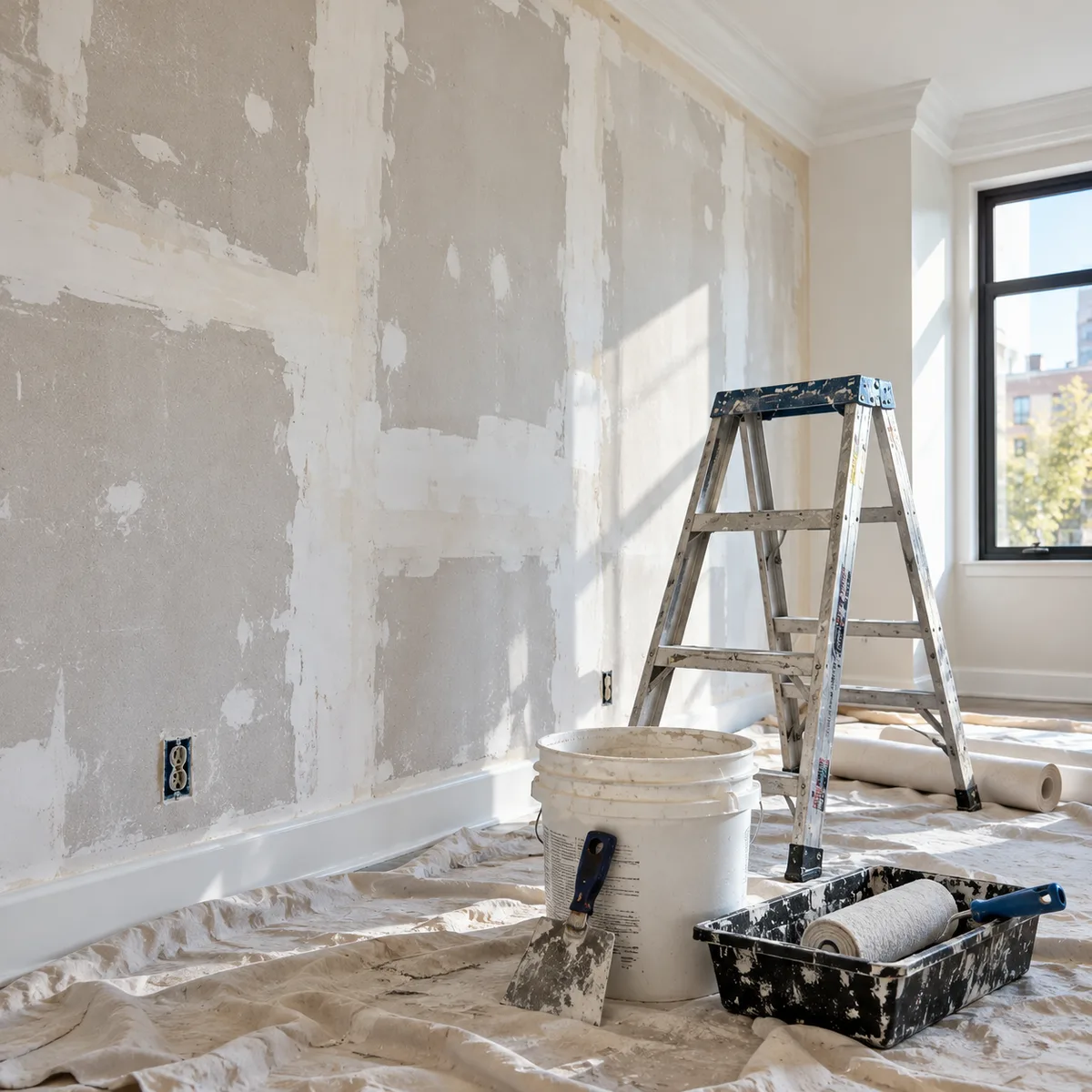
Taking wallpaper down is only the start. A proper removal also gets every trace of adhesive off the wall, repairs whatever the paper was hiding, and seals the surface so the next finish holds. Skip a step and you get paint that cracks or bubbles, or new paper that lifts at the seams.
What we remove
- Strippable and peelable wallpapers
- Traditional, painted-over and multi-layer wallpaper
- Vinyl, grasscloth and fabric wallcoverings
- Borders and old peel-and-stick
- Commercial vinyl in offices and rentals
Our removal process
- Protect the room. Floors covered, trim masked, power to wet areas shut off and outlets taped before any water is used.
- Test a section. We identify the paper type, how many layers there are and whether the wall is drywall or plaster.
- Remove dry layers first. Strippable paper and vinyl face layers come off dry.
- Soften and scrape the rest. Backing and stubborn paper are softened with remover solution or steam and scraped at a low angle to protect the wall.
- Wash off the adhesive. Walls are washed and rinsed until no paste residue remains — the step most DIY jobs skip.
- Repair and prime. Torn drywall paper is sealed with a shellac- or oil-based primer before patching, then skim coated, sanded and primed for paint or wallpaper.
Older homes and plaster walls
Many homes around Seattle, Tacoma, Everett and Edmonds have plaster walls and several generations of paper. Plaster tolerates water better than drywall but often hides hairline cracks and loose spots that need repair. In homes built before 1978, paint under the paper may contain lead, so it should be tested before any sanding.
Remove and replace with one crew
If new wallpaper is going up, it makes sense to have the same team remove, prep and hang — the quality of the prep decides how the new paper looks. See wall preparation and wallpaper installation.
Frequently asked questions
Can you paint over wallpaper instead of removing it?
It's possible but rarely a good idea. Paint moisture can loosen the paste so the paper bubbles, seams often show through, and the paper becomes much harder to remove later.
Why is my drywall brown and fuzzy after removing wallpaper?
The paper face of the drywall was torn — usually because the wallpaper was hung on unprimed drywall. It must be sealed with an oil- or shellac-based primer before patching, or the patch will bubble.
How long does wallpaper removal take?
It depends on the paper, the number of layers and how much repair the wall needs. Strippable paper in a small room can be quick; several layers on plaster take much longer.
Do you remove wallpaper before selling a house?
Yes. Removing dated paper and leaving clean, primed walls ready for paint is a common pre-listing job.
Wallpaper Removal near you
We come to you for a free on-site estimate anywhere in our service area: