Quick answer
Wallpaper installation cost in Seattle depends mainly on wall prep (removal, repairs, skim coating, primer), the wallpaper type, pattern repeat, room complexity, height or ceiling work, and building logistics. Because these vary so much, Wallpaper Installer Seattle measures in person and provides a free on-site written estimate that lists every step included.
Key facts
- Wall condition and prep are usually the biggest cost variables.
- Grasscloth, murals, metallics and unpasted papers take longer to hang than standard nonwoven paper.
- Large pattern repeats increase both labor time and the number of rolls needed.
- Ceilings, stairwells and small rooms with many cut-outs take more time per square foot.
- Compare estimates by what they include, not just the total.
What determines wallpaper installation cost in Seattle?
The biggest drivers of wallpaper installation cost in Seattle are the condition of your walls, the type of wallpaper you chose, and how complicated the room is. Square footage matters, but two rooms of the same size can be priced very differently once prep, pattern and layout are factored in.
That is why a reliable quote almost always comes from someone standing in the room. A photo can show the wallpaper you love, but it rarely shows a hairline crack, a glossy paint finish, or a wall that is half an inch out of plumb. Wallpaper Installer Seattle gives free on-site written estimates for exactly this reason: the walls tell us what the job really involves.
Which cost factors matter most?
The table below summarizes the factors that most often move a wallpaper installation estimate up or down, and what you can do about each one.
| Cost factor | Why it affects the price | What you can do |
|---|---|---|
| Existing wallpaper | Old paper has to come off first, and the glue residue must be washed away before new paper can go up. | Mention any old paper (even painted-over paper) when you request an estimate. |
| Wall condition | Cracks, dents, patched holes, heavy texture and peeling paint all need repair or skim coating before hanging. | Point out problem areas during the walkthrough so they are included in the written estimate. |
| Primer | Most walls need a wallcovering primer for adhesion and future removal; glossy or stained walls may need more. | Ask whether priming is included and which primer will be used. |
| Wallpaper type | Grasscloth, murals, metallics, silk and unpasted papers are slower and less forgiving than standard nonwoven paper. | Share the exact product name or a sample so the installer can check its hanging instructions. |
| Pattern repeat and match | Large repeats and drop matches take more time to align and produce more waste per strip. | Note the repeat size and match type from the product label when ordering. |
| Room complexity | Windows, doors, built-ins, outlets, sloped ceilings and outside corners all add cutting and trimming time. | Consider whether every wall needs paper or whether a feature wall gives the look you want. |
| Height and access | Stairwells, two-story entries and vaulted ceilings require planks, scaffolding or extra setup. | Clear the space below tall walls ahead of time. |
| Ceilings | Papering overhead is slower, more physical work and usually needs an extra set of hands. | Ask for ceiling work to be listed separately so you can compare options. |
| Furniture and fixtures | Moving heavy furniture, taking down mirrors, art or shelving adds time. | Empty shelves and move small items before installation day. |
| Building logistics | Condo elevators, loading zones, HOA work hours and limited parking can stretch the schedule. | Share building rules and reserve the elevator if your building requires it. |
How much does wall prep add to the cost?
Wall preparation is often the single largest variable in a wallpaper project, because it can range from a quick prime to a full day of repairs. Smooth, sound, recently painted drywall usually needs only cleaning, light patching and a coat of wallcovering primer.
Walls that need more work tend to fall into a few categories:
- Old wallpaper or border. It has to be removed and the adhesive residue washed off. Our guide to removing wallpaper without damaging drywall explains why this step can be slow on unprimed walls.
- Texture. Orange peel and knockdown textures are common in newer Puget Sound homes and can show through thin papers. Many need a skim coat first; see wallpaper on textured walls for the options.
- Plaster. Older Seattle homes, such as early-1900s Craftsman houses and bungalows, often have plaster walls with cracks or uneven areas that need repair.
- Glossy or problem paint. Semi-gloss paint, water stains and smoke stains may need special primer so the paste grips and stains do not bleed through.
If your home was built before 1978, painted surfaces may contain lead. Any sanding or scraping should wait until the paint has been tested, and that testing or lead-safe work practices can affect both the schedule and the scope. Our wall preparation for wallpaper service covers patching, skim coating and priming so the finished paper lies flat.
Does the type of wallpaper change the installation price?
Yes. The material you choose affects how long each strip takes to hang and how much care the job requires. Here is how common types compare in terms of labor, not product price:
- Nonwoven, paste-the-wall papers are generally the most efficient to hang because the paste goes on the wall and the paper stays dimensionally stable.
- Prepasted and unpasted traditional papers need soaking or pasting and a booking time before hanging, which adds steps.
- Grasscloth and other natural fibers stain easily from paste, show color variation between panels, and must be handled carefully. Our grasscloth wallpaper installation page explains why.
- Murals come in numbered panels that must be placed in order and centered on the wall, so layout planning takes longer.
- Metallic, silk and specialty papers show every seam, fingerprint and wall flaw, so they often call for extra prep.
Why does pattern repeat affect cost?
Pattern repeat affects cost in two ways: it changes how much wallpaper you need to buy, and it changes how long each strip takes to align. A paper with no repeat or a small repeat produces little waste, while a large repeat can leave a long offcut at the top or bottom of nearly every strip.
Drop matches and half-drop matches also take more planning than straight matches, because neighboring strips start at different points in the pattern. If you want the details, read our guide to pattern repeat and match types, and use our roll calculation guide before you order.
How does room layout change the estimate?
A simple rectangular wall with no openings is the fastest surface to paper. Each interruption adds cutting, trimming and matching time. Rooms that typically take longer per square foot include:
- Powder rooms and small bathrooms, where a vanity, toilet, mirror and plumbing all need careful trimming in tight quarters
- Kitchens and dining rooms with cabinets, built-in hutches or chair rail
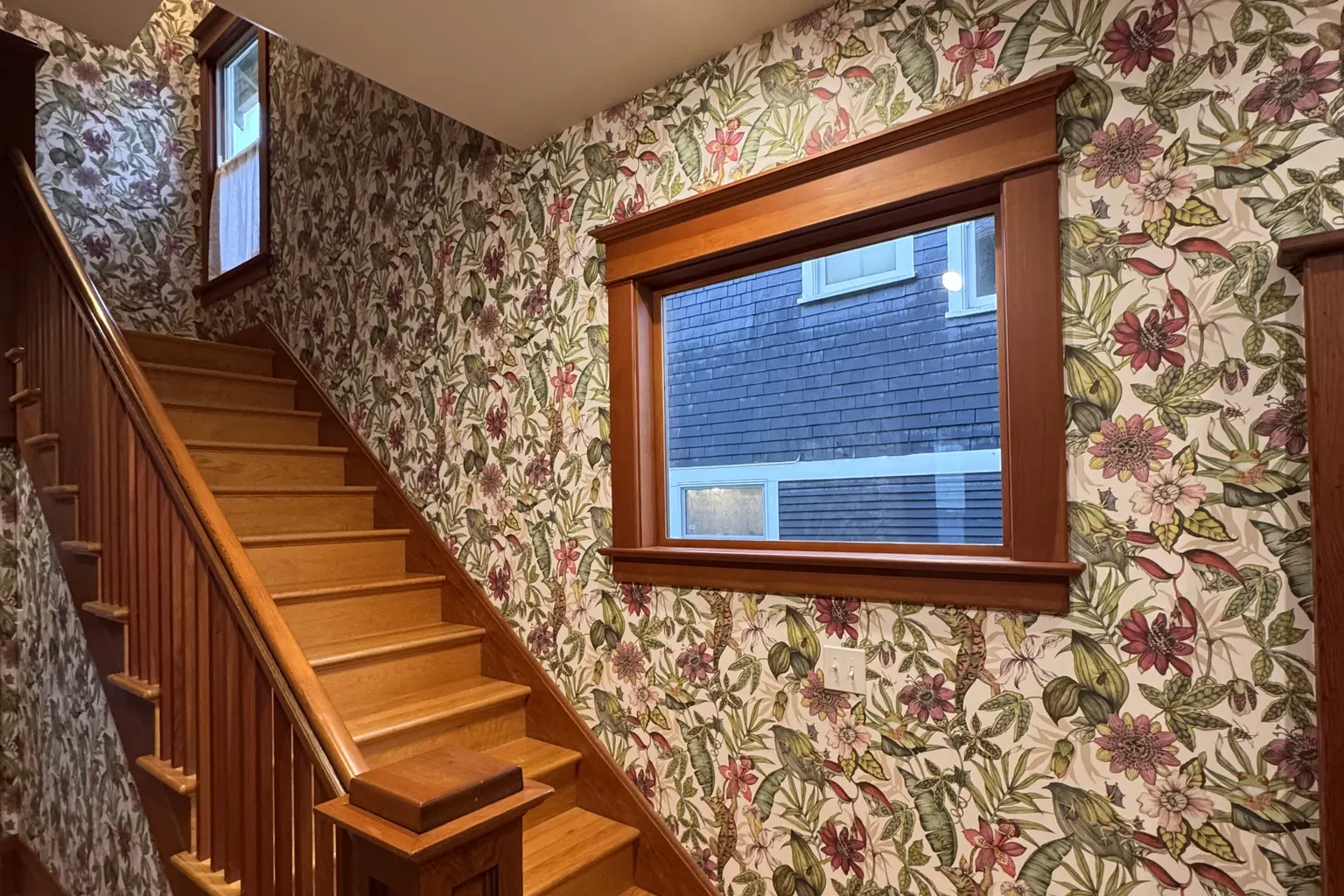
- Stairwells, where long strips must be handled from planks or scaffolding
- Rooms with dormers, sloped attic ceilings or many outside corners
- Walls with lots of switches, outlets, vents and thermostats
A small powder room can therefore take a surprising amount of time compared with a large accent wall in a living room. That is normal, and a clear written estimate should reflect it.
Is ceiling wallpaper more expensive to install?
Ceiling wallpaper usually costs more per square foot to install than the same paper on walls. Hanging paper overhead is physically demanding, often needs two people, and leaves no room for error at the edges where ceiling meets wall.
Textured ceilings add another layer. Older popcorn ceilings may contain asbestos and should be tested before anyone scrapes or sands them. If you are considering a papered "fifth wall," our ceiling wallpaper installation page covers what is involved.
Do Seattle-area logistics affect the price?
Local logistics can affect scheduling and time on site, which can show up in an estimate. Downtown, Capitol Hill, South Lake Union and Belltown condo buildings often require elevator reservations, certificates of insurance, and work within set hours. Homes on steep lots or narrow streets can mean a longer carry from the parking spot to the room.
The Pacific Northwest climate matters too. Bathrooms and laundry rooms here deal with a lot of indoor humidity during the long wet season, so a bathroom project may call for a moisture-tolerant paper and good ventilation. These are planning points rather than surcharges, but they shape the scope of work.
How do installers usually price wallpaper jobs?
Wallpaper installers commonly price by the roll, by the wall or room, or by the project as a whole. Each method can be fair; what matters is that the estimate tells you exactly what is and is not included.
When you compare quotes, check whether each one includes:
- Removal of existing wallpaper and adhesive residue
- Patching, skim coating and wallcovering primer
- Removing and reinstalling switch plates and outlet covers
- Moving furniture and protecting floors
- Cleanup and disposal of scraps
- Any second visit, such as priming one day and hanging the next
A lower number that leaves out prep is not really a lower price. Our guide on how to choose a wallpaper installer lists more questions to ask.
How can I keep my wallpaper project on budget?
The most effective way to control cost is to get the plan right before you buy wallpaper. A few practical steps help:
- Get the measurements confirmed first. Wallpaper Installer Seattle confirms your roll count from on-site measurements before you order, which helps you avoid buying too little or far too much.
- Order everything from one batch. Rolls from different print runs can differ slightly in color, so order enough at once, plus a spare.
- Think about scope. A single feature wall or a powder room can deliver a big visual impact with fewer rolls and less labor.
- Do the easy prep yourself. Clearing the room, emptying shelves and taking down art saves installer time.
- Bundle work. If you need removal, prep and hanging, scheduling it as one project avoids repeat setup.
Get a free on-site estimate in Seattle
Wallpaper Installer Seattle is licensed and insured, with 10+ years of residential and commercial experience. We do not have a showroom; we come to your home or business, measure, look at the walls, and give you a free written estimate that spells out every step. Call or text (425) 500-6842, email seattlewallpaper@gmail.com, or request your free on-site estimate. We reply to requests within 24 hours.
Related services
Frequently asked questions
Why can't I get a wallpaper installation price over the phone?
The same room can be a quick job or a multi-day project depending on wall condition, old wallpaper, texture and layout, none of which shows up well in a phone call. An on-site visit lets the installer measure, check the walls and give a written estimate based on what is actually there.
Is removing old wallpaper included in the installation cost?
Not automatically. Removal is a separate step that depends on how the old paper was hung and whether the walls were primed, so it should be listed as its own line in your estimate. If you suspect paper under paint, mention it during the walkthrough.
Does a small powder room cost less than a large living room wall?
Not always. A powder room has a vanity, toilet, mirror, plumbing and many corners, so it often takes more time per square foot than a large open wall. Fewer rolls are needed, but the labor can be similar.
Does the wallpaper price affect the installation price?
The product price itself does not set the labor, but the type of paper does. Delicate materials such as grasscloth, silk and metallics require more careful handling, and they often need smoother walls, which can add prep time.
Will I pay for wallpaper I do not use?
You buy the wallpaper, so ordering the right amount matters. Wallpaper Installer Seattle confirms the roll count from on-site measurements before you order, including allowance for pattern repeat and a spare roll for future repairs.
Are there extra considerations for condo buildings in Seattle?
Many condo buildings have rules about work hours, elevator reservations and proof of insurance. These logistics can affect scheduling and time on site, so share your building's requirements when you request an estimate.