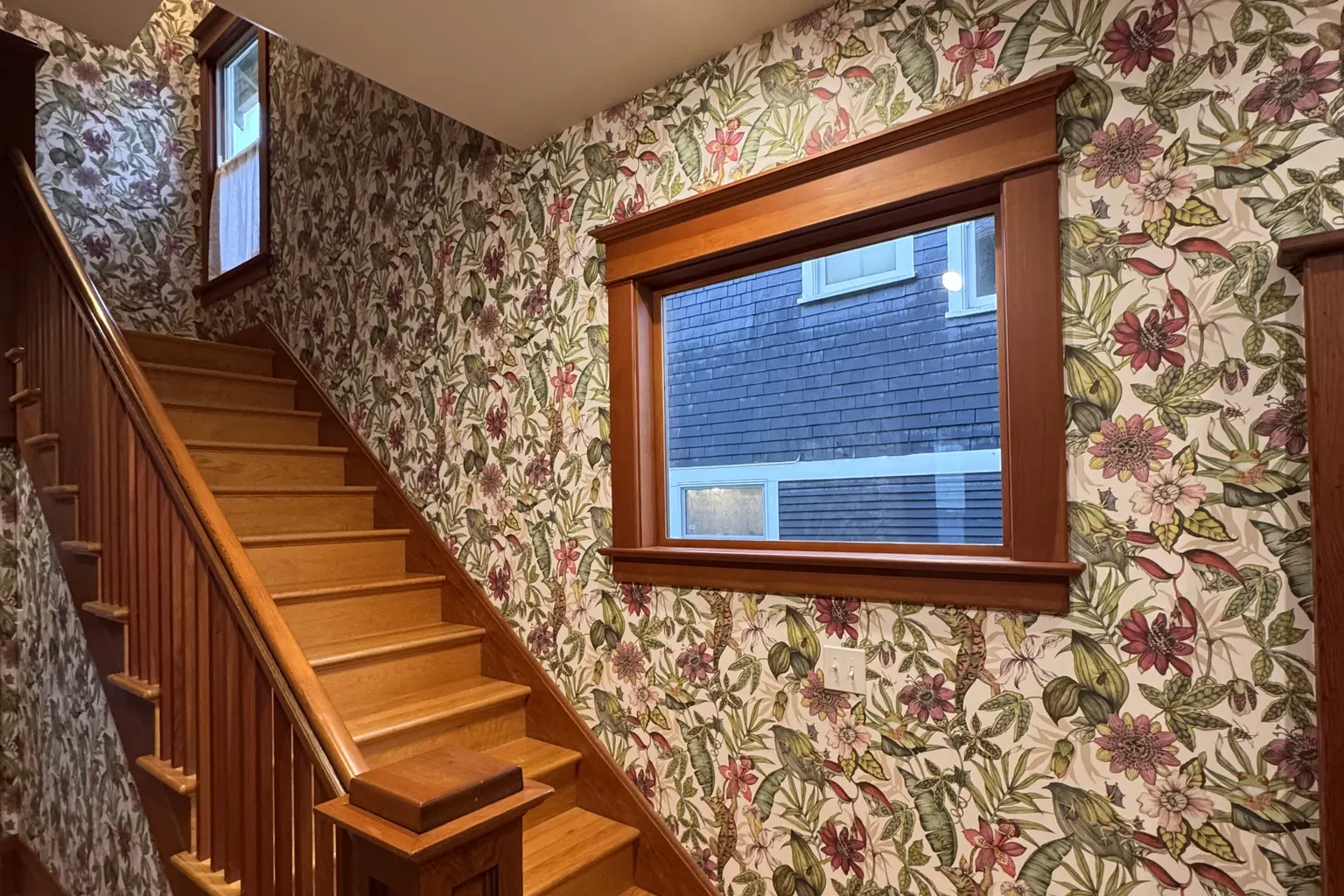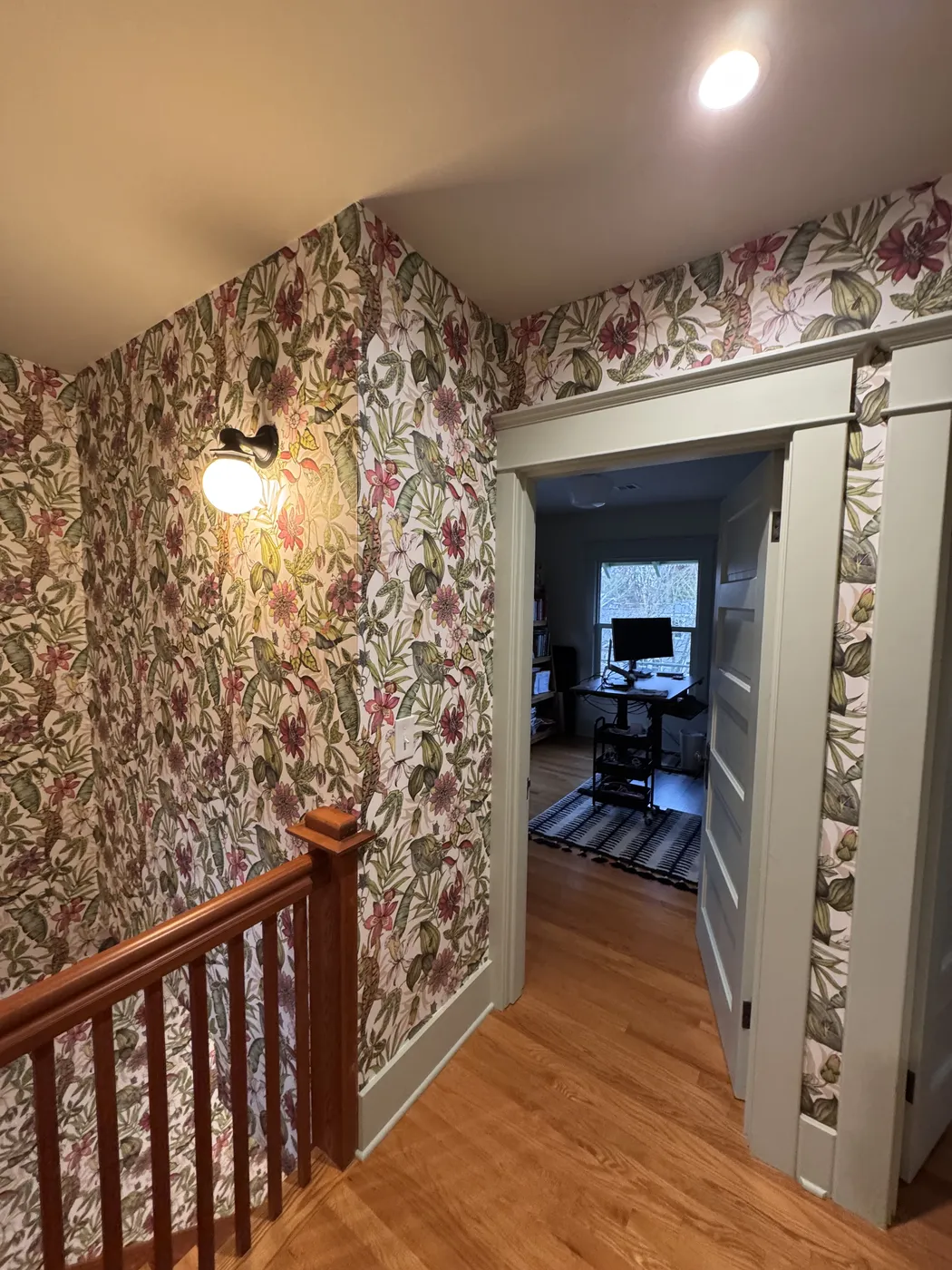
Quick answer
The wallpaper installation process starts with protecting the room and removing switch plates, followed by patching and priming the walls, planning the layout with a plumb line, then hanging, smoothing and trimming each strip. Most wallpaper is dry to the touch within hours and fully set in a day or two. Wallpaper Installer Seattle walks you through each step.
Key facts
- Clear about 3 feet along every wall and remove art, mirrors and shelves beforehand.
- Keep unopened rolls indoors and confirm they share the same batch or run number.
- Power to outlets in the work area should be off at the breaker while paper is hung around them.
- Wallpaper usually needs a day or two to fully set; avoid fans or heaters aimed at the walls.
- Small bathrooms, stairwells and ceilings take longer than open walls.
What happens during the wallpaper installation process?
The wallpaper installation process follows a predictable order: protect the room, prepare and prime the walls, plan the layout, hang and trim each strip, then clean up and reinstall covers. Most of the skill goes into the planning and prep you never see in the finished room.
Knowing what to expect makes the day easier for everyone. This guide explains how to get your space ready, what the installer does hour by hour, how long the paper takes to dry, and how to care for it afterward.
How should I prepare my home before the installer arrives?
The most helpful thing you can do is give the installer a clear, empty working area around every wall being papered. Use this checklist in the day or two before installation:
- Clear the walls. Take down art, mirrors, shelves, curtain rods and TV mounts. Leave the hardware in a labeled bag if you want it reinstalled in the same spot.
- Move furniture. Pull large pieces to the center of the room or into another room, leaving about 3 feet of clearance along each wall.
- Empty shelves and built-ins near the work area, and remove small items from vanities and countertops in bathrooms.
- Keep the wallpaper indoors. Store the unopened rolls in a dry, room-temperature space, not a damp garage, so they acclimate.
- Check your rolls. Confirm the count and that every label shows the same batch or run number. Do not open or cut them.
- Plan for pets and kids. Paste buckets, ladders and sharp blades are part of the job, so keep the room off limits.
- Clear a path and parking. Let the installer know about parking, gate codes, or building rules such as elevator reservations.
- Set the temperature. Keep the room at a normal indoor temperature; avoid running space heaters or open windows on a cold, wet day.
Leave paint touch-ups and new paint for the installer to coordinate. Fresh paint generally needs time to cure before wallpaper or primer goes over it, and the installer can advise based on your products.
What does the installer do first?
The first hour is about protection and inspection. Wallpaper Installer Seattle starts by laying drop cloths, setting up a cutting table, and walking the walls with you to confirm which surfaces are being papered and where the pattern should be centered.
Next comes electrical safety. Switch plates, outlet covers and vent covers come off so the paper can be trimmed neatly around them. Because paste is wet, power to outlets and switches in the work area should be turned off at the breaker while paper is being hung around them.
How are the walls prepared on installation day?
Wall prep on installation day typically covers patching small holes, sanding repairs smooth, cleaning off dust, and applying a wallcovering primer. Larger jobs, such as removing old wallpaper or skim coating a textured wall, are often done on a separate earlier visit so the surface can dry fully.
Primer needs time to dry before paper goes on, so the schedule depends on the product and conditions in the room. On some projects the installer primes one day and hangs the next. Our guides to wallcovering primer and wall preparation for wallpaper explain why this step matters.
For homes built before 1978, painted surfaces may contain lead. Sanding should wait until the paint has been tested, which is something to sort out before installation day rather than on it.
How does the installer plan the layout?
Before a single strip goes up, the installer decides where to start and where to finish. Wallpaper rarely matches perfectly at the final seam, so the goal is to place that last seam in the least visible spot, such as a corner behind a door.
Layout planning also includes:
- Drawing a plumb line. Walls and corners are rarely perfectly vertical, so the first strip is aligned to a level line, not to the corner.
- Centering the pattern. On a feature wall or above a fireplace, a dominant motif is usually centered.
- Setting the ceiling line. The installer decides where the pattern should break at the top so a key element is not cut in half.
- Checking the rolls. Rolls are compared side by side in good light to confirm color consistency before cutting.
To understand why match type affects layout, see pattern repeat and match types.
What happens when the wallpaper is hung?
Hanging is a cycle repeated strip by strip: cut, paste, hang, smooth, match, trim, and wipe. The exact steps depend on the paper.
- Paste-the-wall nonwovens have adhesive rolled directly onto the wall, then the dry strip is pressed into place.
- Unpasted traditional papers are pasted on the back, then folded and "booked" for a few minutes so the paper relaxes before hanging.
- Prepasted papers are activated with water and booked according to the manufacturer's instructions.
- Murals go up panel by panel in numbered order; see our wall mural installation page.
Each strip is smoothed from the center outward to push out air, seams are butted tightly together, and excess at the ceiling and baseboard is trimmed with a sharp blade against a straightedge. Paste is wiped off the surface as the installer goes, since dried paste can leave a sheen.
How long does wallpaper installation take?
A single accent wall is often hung in part of a day, while a full room or a powder room can take a full day or more. Time depends less on square footage than on prep, pattern and complexity.
Here is a rough sense of how a typical one-room day flows:
- Arrival and setup: protection, walkthrough and removing covers
- Prep: patching, sanding and priming, if not done earlier
- Layout: plumb lines, pattern placement and roll check
- Hanging: the bulk of the day, strip by strip
- Detail work: trimming around windows, outlets, fixtures and corners
- Finish: cleanup, reinstalling covers and a final walkthrough
Small bathrooms surprise many homeowners. Cutting around a vanity, toilet, mirror and pipes is slow, careful work. Stairwells and ceilings also take longer because of ladders, planks and long strips.
How long does wallpaper take to dry?
Most wallpaper is dry to the touch within hours but needs about a day or two for the adhesive to fully set, depending on the paper, paste, temperature and humidity. Damp Pacific Northwest weather can slow drying, especially in rooms with little airflow.
During the drying period:
- Keep the room at a steady, normal indoor temperature.
- Avoid pointing fans or heaters directly at the walls, which can dry seams too quickly and cause them to open.
- Do not lean furniture or hang art against the new paper yet.
- In bathrooms, ask your installer how long to wait before taking steamy showers, and run the exhaust fan when you do.
Small bubbles sometimes appear soon after hanging and often flatten as the paper dries. If a bubble or lifted seam remains after the paper has fully dried, let your installer know rather than trying to fix it yourself.
How do I care for new wallpaper?
Gentle, product-appropriate care keeps wallpaper looking good for years. Check the label for the cleaning rating, since papers range from spongeable to scrubbable, and some, like grasscloth, should not get wet at all.
- Dust occasionally with a soft, dry cloth or a vacuum brush attachment.
- For washable papers, blot marks with a damp sponge and mild soap, then pat dry.
- For grasscloth and natural fibers, dust only and address stains promptly; see our guide to grasscloth care.
- Use ventilation in bathrooms and laundry rooms to limit humidity.
- Keep leftover rolls flat in a dry closet, labeled with the room and run number, for future repairs.
Book your installation with a free on-site estimate
Wallpaper Installer Seattle is licensed and insured, with 10+ years of experience hanging wallpaper in Seattle-area homes and businesses. We come to you to measure, confirm your roll count, review prep, and provide a free written estimate before installation day. Call or text (425) 500-6842, email seattlewallpaper@gmail.com, or request a free on-site estimate. We reply within 24 hours.
Related services
Frequently asked questions
Do I need to be home during wallpaper installation?
It helps to be there at the start for a walkthrough to confirm walls, pattern placement and any outlets or fixtures. After that, many homeowners go about their day, as long as the installer has access and the room is clear.
Can I stay in the room while wallpaper is being installed?
It is best to keep the work area clear for the installer's safety and yours. Ladders, paste, sharp blades and open outlets are part of the process, so kids and pets should stay out.
Why does new wallpaper have bubbles?
Small bubbles can appear while paste is still wet, and many flatten on their own as the paper dries. If bubbles or lifted seams remain after a day or two, contact your installer instead of pressing or cutting them yourself.
Is wallpaper installation messy?
There is some mess during the work, mainly paste and paper scraps, but floors and furniture are protected with drop cloths. A professional installer wipes paste off the paper and trim as they go and cleans up before leaving.
When can I hang pictures back on the wall?
Wait until the paper has fully dried, usually a day or two, before rehanging art or mirrors. Using the original hardware locations, if your installer marked them, helps avoid extra holes in the new paper.
Should I paint the trim before or after wallpaper?
Paint trim and ceilings before the wallpaper goes up, and allow the paint to cure. Painting afterward risks getting paint on the new paper, which is difficult to clean off.