Quick answer
Grasscloth is a natural fiber wallcovering woven from materials like sisal, jute or seagrass on a paper backing. Its pros are rich texture and warmth; its cons are visible seams, color variation between strips and sensitivity to water. Wallpaper Installer Seattle recommends it for dry, low-traffic rooms, inspecting every roll before hanging, and cleaning it dry only.
Key facts
- Visible seams and strip-to-strip color variation are normal for grasscloth, not defects.
- Inspect all rolls before hanging; most manufacturers won't accept claims once material is installed.
- Paste or water on the face can stain permanently, so careful installation matters.
- Many manufacturers recommend reverse hanging alternate strips to reduce edge shading.
- Clean dry with a soft brush vacuum attachment and blot spills; never scrub.
- Avoid full bathrooms, kitchens and high-contact areas.
What is grasscloth wallpaper?
Grasscloth is a wallcovering made from natural plant fibers woven into a mat and laminated to a paper backing. Common fibers include sisal, jute, arrowroot, seagrass, hemp and raffia, and each gives a different texture, from tight and fine to loose and knobby.
Because the fibers are natural, no two strips are exactly alike. Color shifts slightly from strip to strip, and the weave changes density along the length of the roll. That variation is the whole appeal, and it is also the reason grasscloth wallpaper installation is less forgiving than hanging a printed paper.
What are the pros of grasscloth?
The biggest advantage of grasscloth is warmth: it adds texture and depth that flat paint and printed papers cannot match. It suits a wide range of styles, from Craftsman and midcentury homes to modern condos and calm offices.
- Texture and depth. Light plays across the weave, so a wall looks different in morning and evening light.
- Hides minor wall flaws. The thickness of the weave masks small dings and hairline imperfections better than smooth or metallic papers.
- Acoustic softening. Natural fiber absorbs a little sound, which helps in echoing rooms with hard floors.
- Works with color. Dyed and printed grasscloths give you saturated color with a natural, matte surface.
What are the cons of grasscloth?
The main drawbacks are visible seams, color variation between strips, and sensitivity to water and stains. None of these are defects; they are the nature of the material, and you should be comfortable with them before ordering.
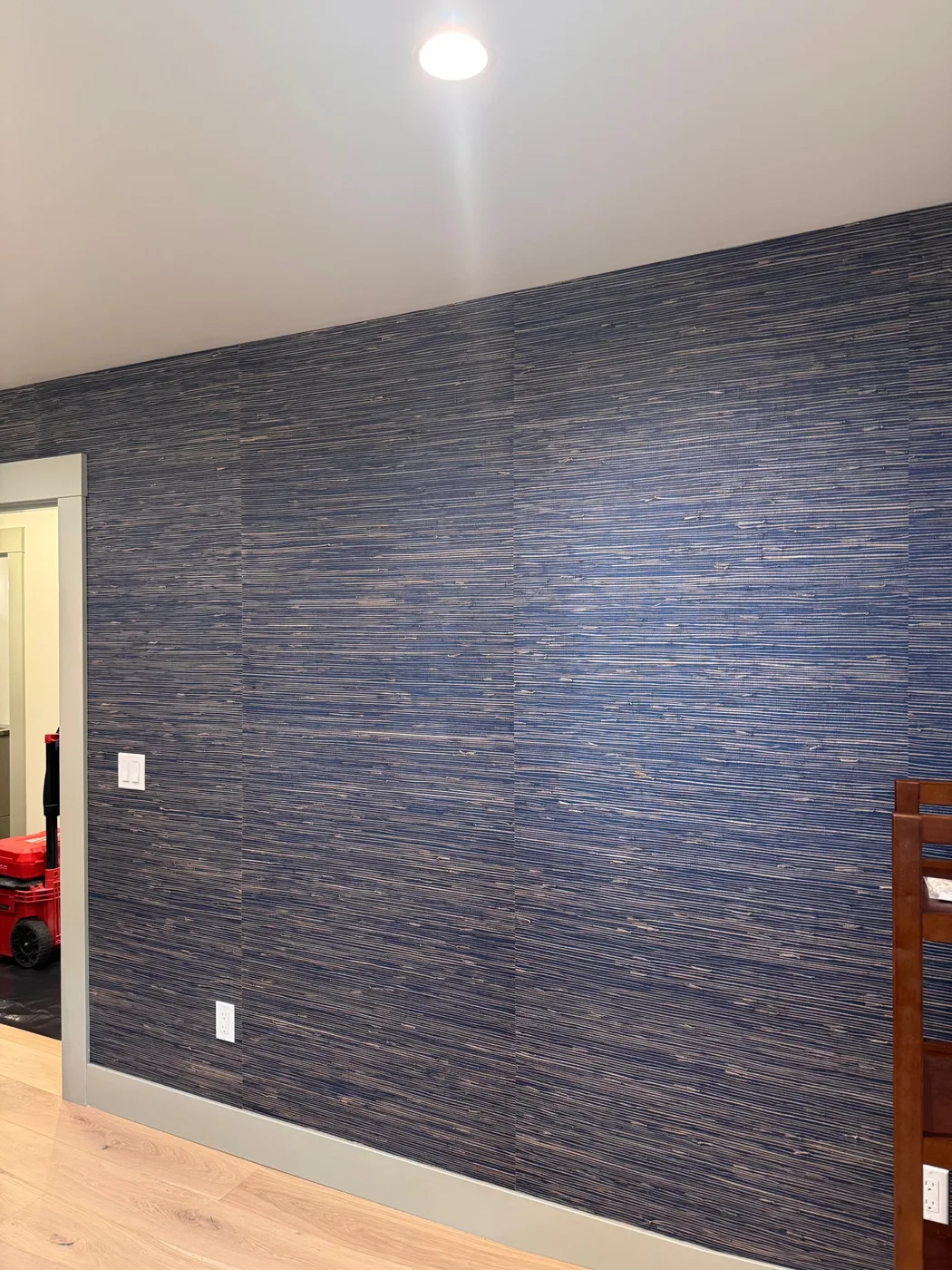
- Seams show. Grasscloth cannot be pattern-matched the way a printed paper can, so each seam reads as a soft vertical line. A careful installer minimizes this but cannot erase it.
- Shading between panels. Adjacent strips can look lighter or darker, especially when viewed at an angle to a window.
- Water marks. Paste or water on the face can leave stains that will not wash out.
- Fading. Natural dyes can fade in strong direct sun, so south- and west-facing walls deserve thought.
- Not scrubbable. You cannot wash grasscloth, and pets that like to scratch can snag the fibers.
Is grasscloth wallpaper installation harder than regular wallpaper?
Yes. Grasscloth is one of the more demanding materials to hang because there is almost no margin for error with paste, seams or panel order. It is the main reason we offer grasscloth wallpaper installation as its own service rather than lumping it in with standard papers.
Inspecting the rolls first
Before anything goes on the wall, every roll should be unrolled and checked in good light for color, run number and flaws. Most manufacturers will not accept a claim after the material has been hung, so problems need to be caught on the floor, not on the wall. All rolls should come from the same run or lot.
Wall preparation and primer
Grasscloth needs a smooth, sound, primed surface. A pigmented wallcovering primer helps the paste bond and makes future removal easier. With thin or loosely woven grasscloth, the wall color can show through the weave or at the seams, so the primer is often tinted close to the background color of the paper. Our guide to choosing a wallcovering primer covers the options, and the wall preparation service handles patching, skim coating and priming.
Paste and booking
Most grasscloth is unpasted. The installer rolls the recommended adhesive onto the back, books the strip (folds it paste to paste) for a consistent time so the backing relaxes evenly, then hangs it. Too much paste can seep through the weave; too little and the edges lift. Any adhesive that touches the face has to be dealt with carefully, because wiping it with a wet sponge can cause the very stain you are trying to avoid.
Hanging order and reversing strips
Many grasscloth manufacturers recommend reverse hanging: every other strip is rotated 180 degrees so the edges that sat next to each other in the roll meet at the seam. This reduces the visible difference in shade from one edge of a strip to the other. Strips are also hung in roll order so that the color drifts gradually rather than jumping.
Trimming and seams
Seams are butted tightly and trimmed with a fresh blade at every cut. Fibers drag and fray under a dull blade, so it is normal to see a professional change blades constantly. Seams are pressed with a soft tool rather than a hard seam roller that could crush or shine the weave.
Where should you use grasscloth, and where should you avoid it?
Grasscloth works best in dry, low-traffic rooms, and it is a poor choice anywhere it will get splashed or regularly touched. Here is a quick guide.
| Room | Good fit? | Why |
|---|---|---|
| Living room, den, library | Excellent | Dry, low contact, texture adds warmth |
| Bedroom | Excellent | Quiet, little wear, softens sound |
| Dining room | Good | Fine above a chair rail or wainscot; keep away from spills |
| Home office | Good | Watch for chair backs rubbing the wall |
| Powder room | Possible | No shower humidity, but splashes near the sink are a risk |
| Full bathroom | Not recommended | Steam and splashing can stain and loosen fibers |
| Kitchen | Not recommended | Grease and water cannot be cleaned off |
| Mudroom, kids' playroom | Not recommended | High contact and scuffing |
In the Seattle area, damp winters mean humidity matters even in rooms without showers. A bathroom with a strong exhaust fan is a different situation from one without, and our guide to wallpaper in Pacific Northwest bathrooms goes into detail. If you love the look but need durability, printed vinyl faux grasscloth gives a similar texture with a washable surface.
How do you clean and care for grasscloth?
Clean grasscloth dry: vacuum it gently with a soft brush attachment or dust it with a clean, dry cloth, working with the direction of the weave. That handles most routine upkeep.
- Dust a few times a year. Dust settles into the weave and dulls the color over time.
- Blot, never rub. If something splashes the wall, blot immediately with a dry, clean, white cloth. Rubbing pushes the stain deeper and can fray fibers.
- Skip cleaners. Household sprays and water can leave rings. For a stubborn mark, test any method on a leftover scrap first.
- Manage sunlight. Sheers, shades or UV window film slow fading on sunny walls.
- Keep leftovers. Save a spare roll or large scraps from the same run for repairs, stored flat and dry.
Can damaged grasscloth be repaired?
Small areas can sometimes be repaired by replacing a full strip, but matching color is the challenge. A replacement strip from the original run, stored out of the sun, gives the best chance of blending in. Patches cut into the middle of a strip usually show, so a seam-to-seam replacement is the cleaner fix.
When grasscloth eventually comes down, the fiber layer often peels away from the backing, leaving paper on the wall to soak and scrape. A properly primed wall makes this much easier. See removing wallpaper without damaging drywall for what that process involves.
How many rolls of grasscloth should I order?
Order enough to finish the job from one run, plus a little extra, and have your installer confirm the count before you buy. Grasscloth is often sold in wider double rolls, and since it is usually free match there is little pattern waste. Strips do need to be cut long for trimming, though, and you want spares from the same run for repairs.
Re-ordering later is risky because a new run can be visibly different. Our article on how many rolls of wallpaper you need walks through the math, and we confirm the final roll count from on-site measurements before you place your order.
Get a free on-site estimate for grasscloth
Wallpaper Installer Seattle has hung grasscloth in homes and businesses across the region for more than 10 years. We are licensed and insured, and we come to you: there is no showroom to visit, just a free on-site written estimate at your home or business. Call or text (425) 500-6842, email seattlewallpaper@gmail.com, or request your free estimate online. We reply within 24 hours.
Related services
Frequently asked questions
Why can I see the seams on my grasscloth?
Grasscloth is a woven natural material that cannot be pattern-matched, so each seam shows as a soft line. Tight butted seams, roll-order hanging and reverse hanging minimize it. Some seam visibility is expected and described by manufacturers as a characteristic of the product.
Can grasscloth go in a powder room?
It can, since powder rooms have no shower steam, but splashes near the sink can stain it. Many homeowners keep grasscloth away from the vanity wall or choose a vinyl faux grasscloth for that room. Good ventilation also helps.
Should I paint the wall before grasscloth goes up?
The wall should be primed with a wallcovering primer rather than just painted. With thin or open weaves, tinting the primer close to the paper's background color keeps the wall from showing through at seams. Your installer can recommend a tint after seeing the material.
Is faux grasscloth a good alternative?
Yes, for areas that need to be wiped down. Vinyl faux grasscloth mimics the texture, matches more consistently at seams and tolerates cleaning. It lacks some of the depth of real fiber but is far more practical in busy or damp spaces.
Does grasscloth fade?
Natural and dyed fibers can fade in strong direct sunlight over time. Window treatments or UV film reduce this. Lighter natural tones show fading less than deep dyed colors.
Can grasscloth be hung over existing wallpaper?
It is not recommended. Grasscloth is heavy when pasted, and old paper underneath can loosen or bubble. Removing the old wallcovering and priming the wall gives a far more reliable result.