Quick answer
The best primer for wallpaper is a dedicated wallcovering primer, usually a pigmented acrylic formula made to give walls even porosity, good tack, and easy future removal. Use a tinted primer under grasscloth and thin papers, a mildew-resistant product in bathrooms, and seal new drywall or skim coats before papering. Wallpaper Installer Seattle primes every wall before installation.
Key facts
- Wallcovering primer evens out porosity, improves tack, and lets paper strip off later without tearing drywall.
- Hanging wallpaper on unprimed drywall bonds the paste to the drywall face and makes future removal destructive.
- Tinted primer close to the paper's background color keeps seams and natural gaps in grasscloth from showing.
- Bathrooms and other humid rooms benefit from mildew-resistant primer paired with a suitable adhesive.
- Shellac or oil-based primers are used to seal torn drywall paper and stains before the wallcovering primer goes on.
- Always follow the wallpaper manufacturer's prep and primer instructions; they can affect warranty coverage.
Do you need primer before hanging wallpaper?
Yes. Nearly every wallpaper manufacturer calls for a primed surface, and professional installers prime as a standard step even when a wall looks ready. Paint alone is not a substitute, and bare drywall is never acceptable.
Primer does three jobs that the wallpaper cannot do on its own. It makes the whole wall absorb paste at the same rate, it gives the paper something to grip without locking onto the wall permanently, and it protects the surface underneath so the paper can be removed later. Skip it and you will often see seams opening, uneven adhesion, or torn drywall the day you redecorate.
What does a wallcovering primer actually do?
A wallcovering primer is formulated specifically for paper and adhesive, not just for paint. Here is what it contributes:
- Uniform porosity. Patched areas, bare joint compound, and painted drywall all absorb moisture differently. Primer evens that out so paste dries consistently and seams do not shrink apart.
- Tack and slip. Good primers grab the paper firmly while still giving the installer a few minutes of "slip" to slide each strip into perfect pattern match.
- Strippability. Primer creates a barrier between paste and wall. When it is time to change the paper, it releases at the primer layer instead of pulling up the drywall face.
- Color control. A pigmented primer hides patches, old paint colors, and pencil marks that would otherwise ghost through thin or light papers.
- Stain blocking. Some primers resist bleed-through from water stains, marker, or smoke residue, which can migrate into new paper.
What are the main types of primer for wallpaper?
Most wallpaper jobs use a water-based acrylic wallcovering primer, with shellac or oil-based products reserved for specific problems. The table below summarizes when each one fits.
| Primer type | Best used for | Notes |
|---|---|---|
| Acrylic wallcovering primer (pigmented) | Most walls: new drywall, painted walls, skim coats | Low odor, easy cleanup, can usually be tinted; the standard choice |
| Clear wallcovering primer | Walls that are already a uniform, light color | Does not hide color differences; less common under thin papers |
| Shellac-based primer | Torn drywall paper, stains, knots, odors | Seals fast and does not re-wet paper; strong fumes, needs ventilation |
| Oil-based (alkyd) primer | Sealing damaged drywall, glossy or problem surfaces | Slower drying, strong odor; often followed by a wallcovering primer |
| Mildew-resistant wallcovering primer | Bathrooms, laundry rooms, exterior walls prone to condensation | Contains a mildewcide in the film; does not fix ventilation problems |
You may also hear the term "sizing." Sizing is an older approach that seals a wall and adds tack for paste. Modern wallcovering primers do that job and more, which is why they have largely replaced it in residential work.
When should you use a tinted primer?
Use a tinted primer whenever the wallpaper is thin, light-colored, translucent, or has natural gaps, so whatever is behind it matches instead of contrasting. A white wall behind a dark paper can show as thin bright lines at every seam.
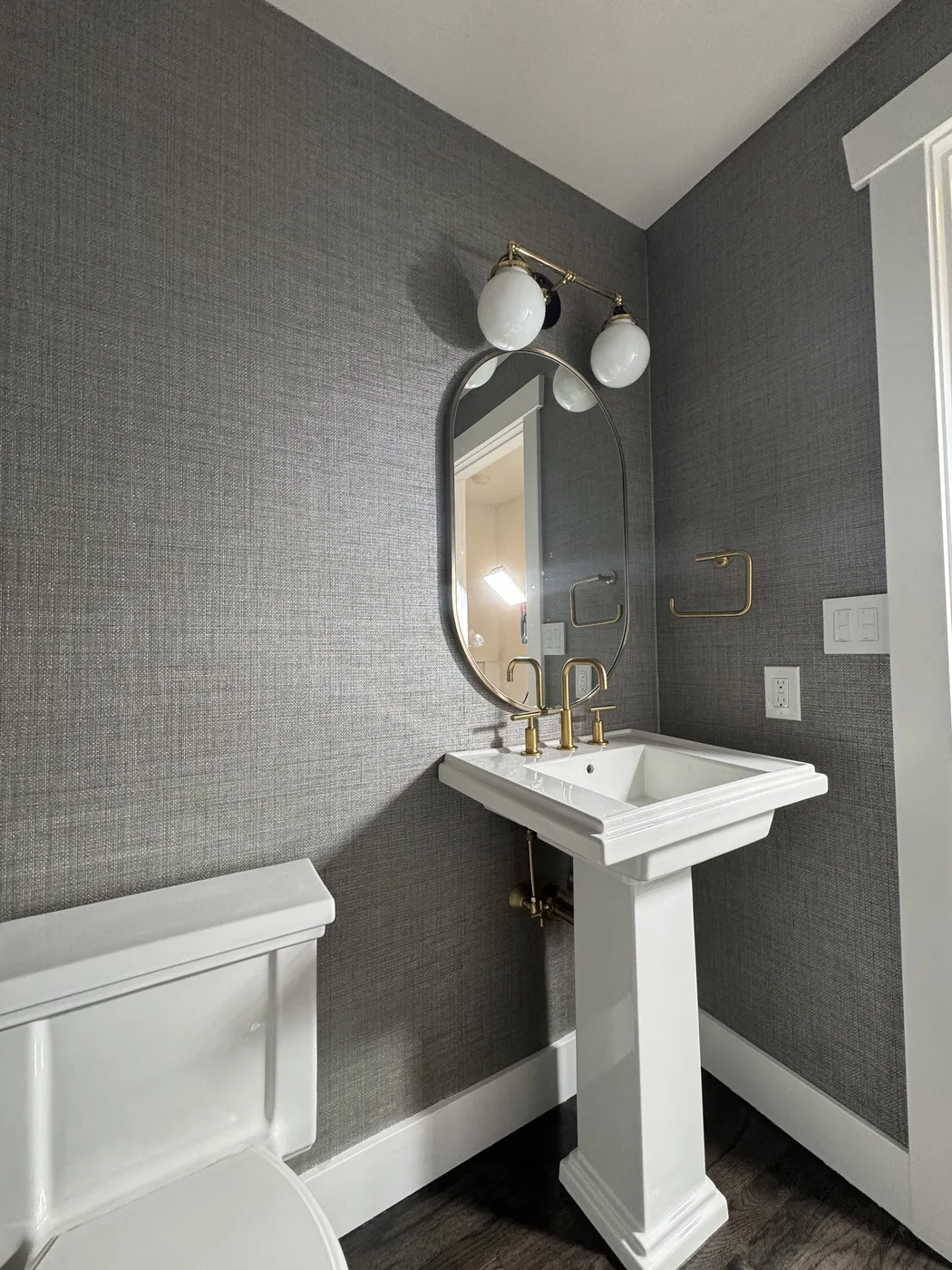
Grasscloth is the clearest case. Natural grasses, sisal, and paperweaves have visible seams and tiny gaps between fibers, and the backing can let wall color show through. Many installers tint the primer to match the paper's background, often a warm tan, gray, or the dominant color in the weave. Our grasscloth pros, cons, and care guide explains why seams are part of the look, and our grasscloth wallpaper installation service includes matched priming as standard.
Tinted primer also helps with:
- Dark or saturated papers, where a white primer can flash at seams.
- Metallic and foil papers, where an even, neutral base improves the reflective finish.
- Murals with large areas of pale sky or background, where a patched wall could ghost through.
Do bathrooms need mildew-resistant primer?
A mildew-resistant primer is a smart choice for full bathrooms, laundry rooms, and any space with regular humidity, and it is common practice in the Pacific Northwest, where long damp seasons keep indoor humidity up. The mildewcide in the primer film helps resist growth behind the paper.
Primer is only one layer of protection, though. Paste choice, a vinyl or water-resistant paper in splash zones, and a bath fan that is actually used all matter more than any single product. If you are planning paper near a shower or tub, read our guide to wallpaper in Pacific Northwest bathrooms before choosing materials.
How do you prime new drywall for wallpaper?
New drywall must be primed with a wallcovering primer rated for raw drywall before paper goes up. Hanging directly on bare drywall bonds paste into the paper face, and removal later will almost certainly tear it.
- Finish the drywall smoothly. Joints and fasteners should be finished and sanded so they disappear. For thin or reflective papers, a skim-coated finish over the whole wall gives the most uniform base. Our guide to wallpaper on textured walls explains Level 5 finishing.
- Let the compound dry fully. Damp joint compound under primer can cause adhesion problems and visible joint lines.
- Remove all sanding dust. Wipe or vacuum the wall. Dust prevents primer from bonding.
- Apply the primer evenly. Roll a full, consistent coat. Some primers or wall conditions call for two coats; follow the label.
- Allow proper drying time. Respect the manufacturer's dry time before hanging, and allow more in cool, damp weather.
A basic drywall sealer or paint primer alone is not designed for wallcoverings. If one has already been applied, a wallcovering primer goes on over it.
Can you hang wallpaper on painted walls without priming?
Usually not. Even sound painted walls benefit from a wallcovering primer, and some paint finishes cause specific problems:
- Glossy paint. Satin, semi-gloss, and gloss finishes can be too slick for paste. Clean, scuff-sand, and prime.
- Flat or chalky paint. Can absorb unevenly and release under the pull of drying paper. Primer binds the surface.
- Freshly painted walls. Paint needs time to cure. This matters most with peel-and-stick, where many manufacturers specify a waiting period after painting.
- Peeling or poorly bonded paint. Wallpaper can pull it off the wall as it dries. Scrape and repair first.
In homes built before 1978, old paint layers may contain lead. Test before scuff-sanding or scraping, and use lead-safe practices if the result is positive.
What are the most common wallpaper primer mistakes?
The most common mistake is skipping primer altogether, but several smaller errors cause just as many callbacks. Watch for these:
- Priming only patched spots. Spot-priming leaves areas with different porosity, and paper can dry unevenly or show "flashing" where patches sit. Prime the whole wall.
- Rolling too thin. A starved coat leaves bare or shiny patches. Look at the wall from an angle with a work light; the sheen should be even.
- Hanging too soon. Primer that feels dry to the touch may not be ready for paste. Wet paste on uncured primer can soften it and weaken the bond.
- Ignoring the paper's instructions. Some non-woven, paste-the-wall papers, natural fibers, and murals list a specific primer type or color. Those instructions can affect any warranty.
- Using primer to fix moisture. No primer solves a wall that stays damp from a leak or condensation. Find and fix the source first.
Getting the primer right is also part of an accurate wallpaper installation cost estimate, since prep time varies widely from wall to wall.
What should be done before primer goes on?
Primer only performs on a wall that is clean, dry, sound, and smooth. Before priming, the wall should be:
- Free of old paste residue, washed and rinsed after any wallpaper removal.
- Sealed with shellac or oil-based primer anywhere drywall paper is torn.
- Patched, skimmed, and sanded so no dents, ridges, or texture remain.
- Clean of grease, soap film, and dust, especially in kitchens and bathrooms.
Our wall preparation service takes care of all of this, plus the priming itself, before installation day.
Get a free on-site estimate
Not sure what your walls need? Wallpaper Installer Seattle is licensed and insured with 10+ years of experience. We come to your home or business, look at the walls and the paper you have chosen, and give you a free written estimate that includes prep and priming. Call or text (425) 500-6842, email seattlewallpaper@gmail.com, or request your estimate online. We reply within 24 hours.
Related services
Frequently asked questions
Can I use regular paint primer instead of wallcovering primer?
A standard paint primer is not formulated for wallpaper paste and may not give the right tack or release later. It can work as a base layer, but a dedicated wallcovering primer should go on top. Always check the wallpaper manufacturer's instructions, since they may specify a primer type.
How long should primer dry before hanging wallpaper?
Follow the primer label, which typically lists a minimum dry time before wallcovering. Cool temperatures and high humidity slow drying, so allow extra time in winter. Hanging on tacky primer can cause adhesion and seam problems.
What color should primer be under grasscloth?
Choose a color close to the grasscloth's background or dominant fiber tone, such as a tan, gray, or soft neutral. That way, seams and natural gaps blend in rather than showing white. Your installer can match it from a sample of the actual paper.
Does primer make wallpaper easier to remove later?
Yes. Primer creates a layer between the paste and the wall, so the paper releases at that layer instead of pulling up drywall paper. Walls hung without primer are the ones most likely to be damaged during removal.
Do I need primer for peel-and-stick wallpaper?
Many peel-and-stick manufacturers recommend a smooth, sound wall with fully cured paint, and some recommend or require a specific primer. Check the product instructions. A well-prepared, cured surface is the biggest factor in whether self-adhesive paper stays put.
Is one coat of wallcovering primer enough?
Often one full, even coat is enough on sound, uniform walls. Fresh skim coats, heavily patched walls, or big color changes may need two coats. The goal is a consistent surface with no bare or shiny spots.